Most platforms today are built around a simple idea: more is better.
More connections, more content, more reactions, more visibility.
The problem is this logic, over time, has been shown to nudge people toward comparison, performance, and constant low-level distraction; with research showing that algorithm-driven feeds tend to amplify emotional intensity at the expense of wellbeing.
Natality offers something different…
Limits by design
At the heart of Natality’s social experience are intentional limits. You can form up to 150 connections – no more; reflecting what’s known as Dunbar’s number: the approximate number of relationships the human mind can sustain with any real depth.
By removing the pressure to scale endlessly, Natality frees you from follower counts (and the subtle performative pull that can come with them) to leave space for more intentional networks and connections.
Alignment > algorithms
You don’t connect with others on Natality because an opaque algorithm decided you should see them. You connect because you’ve named what matters to you.
During setup, you select interests and areas you feel called to – business, music, leadership, etc. These allow you to be introduced to others who share your priorities, mirroring how meaningful relationships tend to form in real life: i.e., through shared concerns and overlapping pursuits; proven to be foundational for lasting bonds whether they are personal or professional.
Simplicity that serves
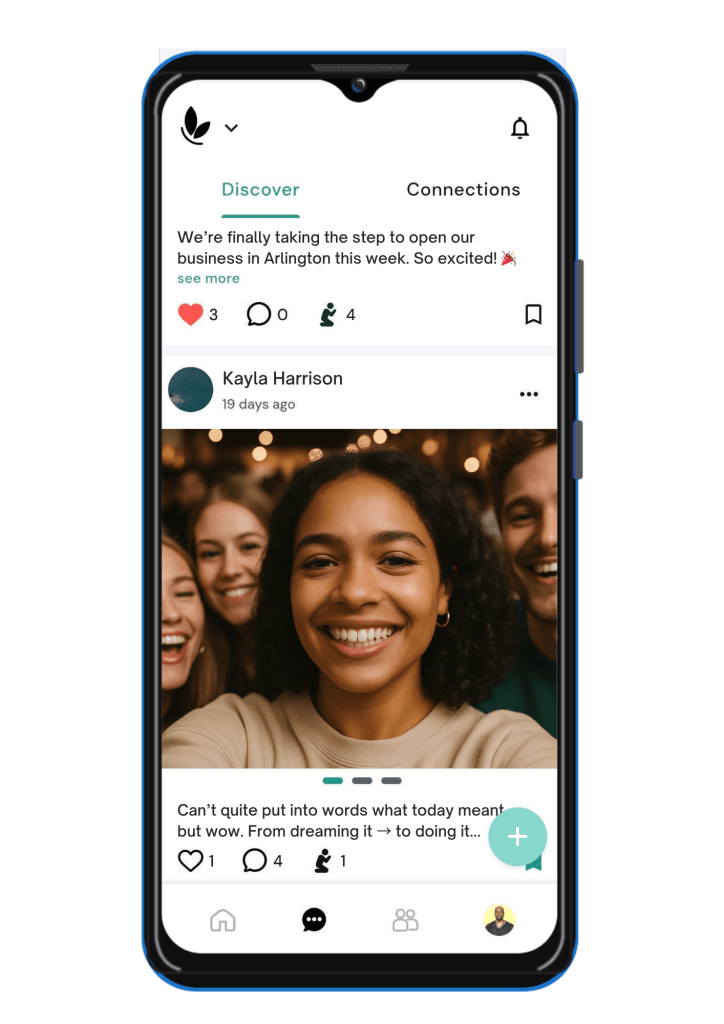
The feed itself is deliberately simple and algorithm free. You won’t find video, autoplay etc. Posts are text and photos only, designed to slow the pace and invite thought rather than reaction. In a world of video-heavy feeds engineered to keep you consuming and scrolling, this matters.
Natality isn’t trying to hold your attention – it’s designed to respect it.
Connection over clicks
One of the most distinctive parts of Natality’s community feed is the prayer reaction. When someone shares something meaningful and you tap the prayer icon, you move beyond offering a fleeting gesture.
For the next seven days, you receive gentle reminders to pray for them. Instead of empathy that evaporates as you scroll on, you’re offered a quiet, sustained way to move from what psychologists call expressive support (“I see you”) to instrumental support (“I’m here with you”), thereby combining the two; a shift consistently associated with deeper relational impact.
A more purposeful space
This all adds up to a different kind of social space – one designed for people who are thinking about purpose, direction, faith, or the shape of their lives.
You don’t have to curate a brand.
You don’t have to stay visible.
You don’t have to keep up.
In a culture that can often leave us feeling overexposed yet under-supported, Natality offers an ad-free environment and a slower feed, where you can share thoughtfully, connect intentionally, and form networks shaped by meaning rather than metrics.
Community feed FAQs
Why does Natality limit connections to 150 people?
Because depth has a cognitive ceiling.
Research in anthropology and psychology suggests that humans can only sustain a limited number of meaningful social relationships at once — often referred to as Dunbar’s number. Beyond that, relationships tend to flatten into weak ties, surface interaction, or performance.
By limiting connections, Natality removes the pressure to accumulate people for visibility or status. The result is a network that feels closer to a real community than an audience — where names stay familiar, stories are remembered, and connection that is genuine and real matters more than reach.
What’s wrong with algorithm-driven feeds?
Algorithms aren’t neutral — they optimize for engagement, not wellbeing.
Over time, research has shown that algorithmic feeds tend to amplify emotionally charged content, comparison, and compulsive checking. This can subtly nudge users toward performance, outrage, or anxiety, even when the intention is simply to stay connected.
Natality removes that layer entirely. There’s no ranking for virality, no optimization for watch time, and no invisible logic shaping what you see. What appears in your feed is shaped by who you’ve chosen to connect with, not what keeps you scrolling.
Will I still be seen if there’s no algorithm boosting posts?
Yes — but in a different way.
Natality isn’t designed to reward constant posting or visibility. Instead of competing for attention, posts are encountered more naturally within smaller, intentional networks.
This removes the subtle pressure to stay “on” or perform — making it easier to share when something genuinely matters, and to step back when it doesn’t.
How does the community feed support journaling, rather than distract from it?
Journaling as a Christian has always been shaped by community as well as solitude — whether that’s through shared reflection, prayer, or encouragement.
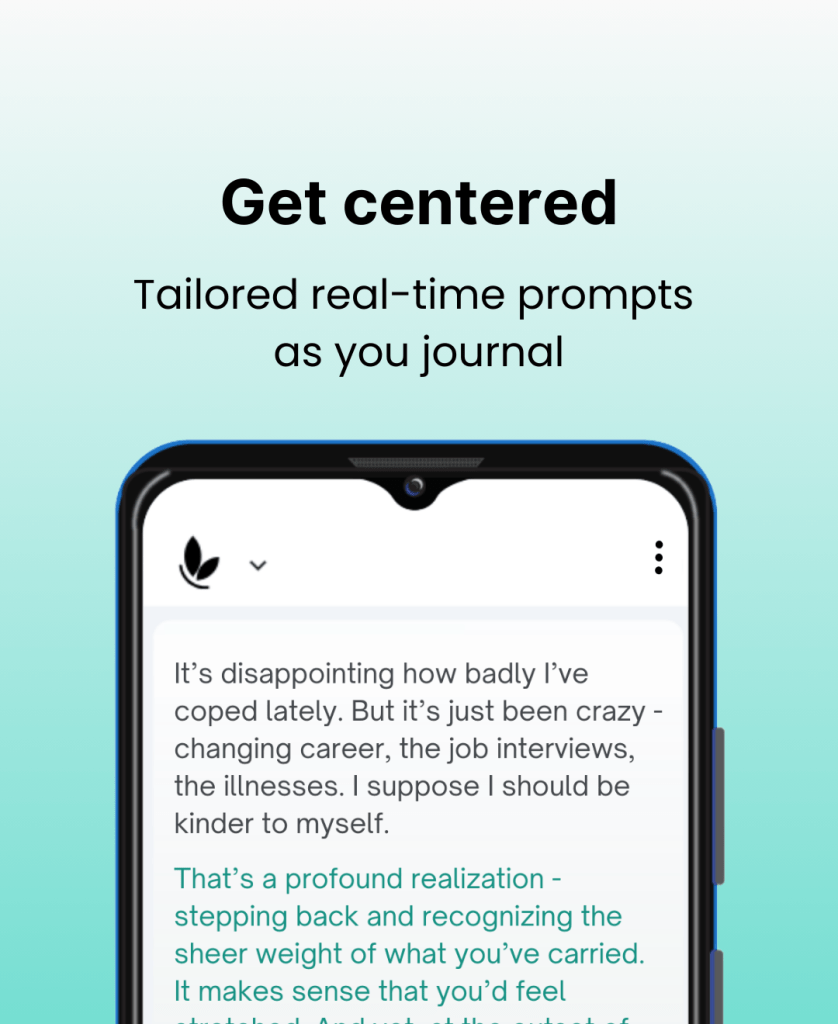
Natality’s community feed is designed to support that rhythm. Journaling remains the place for private honesty and introspection; the community becomes a place where broader reflections and perspectives can be shared safely.
This shared space adds depth to the practice, allowing insights to be witnessed, and growth to be encouraged, strengthened and sustained over time.
What kinds of posts belong on the Natality feed?
People often share:
Reflections or questions they’re sitting with.
Milestones or moments of growth.
Creative work or ideas in progress.
Prayer requests or personal updates.
There’s no expectation to entertain, provoke, or polish. The culture is slower by design, which tends to change what people feel comfortable sharing.
Do I have to be Christian to use the community feed?
No.
Natality’s community is shaped by Christian values, but it isn’t gated by theological agreement. Some people post explicitly faith-shaped reflections; others share in more practical or exploratory ways.
What matters most is shared intent: a desire for meaning, growth, and more thoughtful connection.
What if I’m unsure about faith, or in a season of doubt?
That’s welcome here.
Natality assumes that faith — for many people — is lived through questions, tension, and uncertainty, not constant clarity. The community feed is designed with that in mind.
There’s no pressure to present certainty or a finished story.
How private is the community feed?
Natality’s community is intentionally smaller and ad-free, with privacy and safety built into its design.
You control who you connect with, what you share, and how visible you are. And although there’s a discoverability layer, the privacy mode allows you to restrict the sharing of posts to those you’ve chosen to connect with.


 Natality