I’ll admit, when I first began journaling, the idea there’d be this many ways to practise so introspective an art seemed strange to me.
Why, I thought, if journaling is meant to bring clarity, are there so many ways to do it? Which journaling practice is best? And when should each journaling style be used – or not?
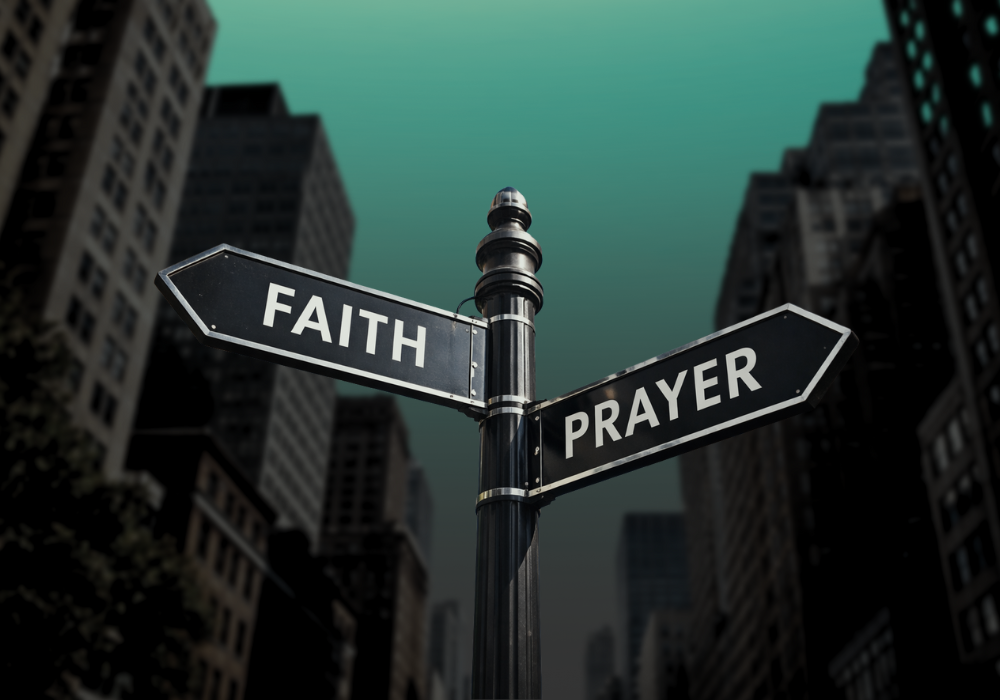
For Christians, nowhere is this confusion more common than around prayer journaling and faith journaling. The terms are often used interchangeably, sometimes even defensively, and occasionally with a hint of suspicion:
Is this just prayer written down? Is this getting too inward? Am I doing it wrong?
So in this guide we’ll break down both prayer journaling and faith journaling to explore the differences, benefits, how each practice works, plus how (and when) to get the best out of them.
Two names, one shared instinct
At their core, prayer journaling and faith journaling arise from the same instinct: the desire to process life with God, rather than merely document experiences.
Both practices resist a purely mental or internalized faith. Both create space for honesty, attention, and spiritual growth. And both recognize something deeply biblical: that clarity often comes from more than simply thinking deeper, or harder – it arises when we slow down enough to listen.
What prayer journaling is (in practice)
Prayer journaling is the practice of writing prayerfully to God in order to process thoughts, seek guidance, and find peace and perspective in everyday life. It is, quite simply, prayer expressed through the written word.
In practical terms, this often looks like:
Writing prayers of petition, intercession, confession, or thanks.
Addressing God directly (“Lord…”, “Father…”, “God, I’m struggling with…”).
Recording prayer requests, names, or ongoing concerns.
Sometimes noting answers, insights, or scriptures alongside prayers.
You could even say many of the Psalms fall into this category. Take Psalm 22 for instance, where we listen in as David expresses his turmoil to God, naming anxiety, confusion, and hope in an unguarded penned prayer.
“My God, my God, why have you forsaken me? You seem far from saving me, far away from my groans…”
With prayer journaling, the orientation is outward and relational. The page becomes a place of dialogue, a way of staying attentive in prayer when the mind might otherwise wander.
For many people – especially those in anxious, dark or distracted seasons – writing prayers helps sustain focus, and it slows the pace enough for prayer to feel less rushed, less performative, and more honest.
Make space to listen, not just think
Natality is designed for moments when prayer feels rushed, heavy, or hard to sustain — offering thoughtful prompts that help you listen, respond, and remain present with God through writing.
Download Natality for FREE, and discover a new way to journal with intention and purpose.
What faith journaling is (in practice)
Faith journaling is the practice of writing reflectively in order to process experiences, clarify beliefs, and discern meaningful actions in light of spiritual values or commitments.
It is done in God’s presence, and so often begins not with addressing God directly, but with attending to lived experience:
Thoughts that keep recurring.
Emotions that feel tangled or unnamed.
Moments of tension, joy, resistance, or clarity.
Responses to scripture, events, or decisions.
Rather than speaking to God immediately, faith journaling often starts by listening inwardly, and trusting that God is present in that attentiveness.
Over time, reflection often widens into prayer naturally. A journal entry might move from What am I noticing? to What might this be inviting me toward? to God, help me walk faithfully here.
Because of this, faith journaling is especially suited to discernment, self-examination, processing emotion, and integrating values and beliefs into lived reality.
Are prayer journaling and faith journaling different, or just overlapping labels?
Prayer journaling and faith journaling are not rival practices. They’re better understood as two movements within the same rhythm, distinct but deeply overlapping:
Prayer journaling emphasizes expression toward God.
Faith journaling emphasizes attention before God.
Many people naturally move between them without naming the shift, just as we see in passages like Psalm 120 where, in verse 2, the Psalmist addresses God directly in prayer:
“Lord, save me from liars and from those who plan evil.”
Yet by verse 5, he has moved from prayer to reflection as he processes the hurt and hardship of exile:
“How terrible it is for me to live in the land of Meschech, to live among the people of Kedar.”
We see this pattern of bouncing between these practices throughout the Psalms; where poetry, journaling and prayer mingle, flowing into and from each other continuously.
The reason separate terms exist is largely historical and pastoral. “Prayer journaling” reassures Christians who fear introspection might drift from faith. “Faith journaling” names a broader reflective space where prayer, scripture, emotion, and meaning can meet.
Both are legitimate. Both are biblical. And neither needs to be defended against the other.
What does each practice cultivate?
Prayer journaling tends to cultivate:
Trust through articulation (“casting your cares”).
Persistence in intercession.
Gratitude through deliberate remembrance.
Dependence rather than self-reliance.
Faith journaling tends to cultivate:
Self-awareness without self-absorption.
Discernment over impulse.
Patience with uncertainty.
Integration between belief and behavior.
Neither is inherently “better” for spiritual growth. However, they do encourage slightly different habits:
Prayer journaling trains the heart to turn outward in trust.
Faith journaling trains the mind to stay present rather than avoid.
Most mature spiritual practices require both.
What entries actually look like
A prayer journal entry might read like a letter or list:
Lord, today I’m anxious about… Please guide… Thank you for…
A faith journal entry might begin more observationally:
I keep noticing resistance when… I felt unsettled after… This verse stayed with me today…
Over time, the lines blur. A reflective entry often becomes prayerful. A written prayer often prompts reflection.
In prayer journaling, scripture often:
Frames prayer.
Becomes a promise to cling to.
Shapes intercession or praise.
In faith journaling, scripture:
Initiates reflection.
Provokes questions.
Illuminates patterns or tensions in life.
Neither approach treats scripture lightly. They simply engage differently with it – one declaratively, the other dialogically.
Theological concerns and common fears
Some Christians worry that faith journaling risks becoming self-focused. And although that concern is understandable, it’s incomplete.
The bible repeatedly calls believers to examine themselves (2 Cor 3:5), to be still (Psalm 46:10), to search the heart (Psalm 139:23), and to cast their cares (Psalm 55:22). None of these are self-absorption; they are acts of humility before God.
Faith journaling becomes problematic only when reflection is severed from surrender; prayer journaling, when expression replaces listening.
In the end, theological safety is more about how open we are to God’s shaping work than any specific format.
When to choose one over the other
Choose prayer journaling when:
Anxiety is high.
You feel scattered or distracted.
You want to remain anchored in petition or praise.
Words come more easily to God than about yourself.
Choose faith journaling when:
You feel stuck, confused, or internally conflicted.
Decisions need discerning rather than forcing.
Emotions feel present but unclear.
Scripture stirs questions rather than answers.
But to be clear, they can and often should be combined, even in the same notebook or journaling session.
What outcomes can you realistically expect from prayer journaling and faith journaling?
Dramatic revelations won’t be a daily occurrence when you begin faith journaling or prayer journaling, but, over time, you can expect:
Greater emotional clarity.
A quieter, steadier faith.
Fewer reactive decisions.
Increased self-honesty.
Deeper prayer that feels less forced.
A growing sense that God is present within your lived experience.
Practicalities: frequency, tools, getting started
Neither practice requires special tools. A notebook and five unhurried minutes are enough. Alternatively you can use a good journaling app.
As for frequency: being consistent helps, but keeping a pressure-free approach often matters far more than how regularly you can set aside time to journal. But in general, two or three intentional sessions a week is often the sweet spot.
With those practicalities in mind, the most important thing is simply to keep showing up in a way that feels gentle and sustainable.
So, let prayer journaling and faith journaling remain what they were always meant to be: spaces where honesty, attention, and trust can grow – slowly, quietly, and faithfully.
Go from scattered to centered
Natality is designed to support the kind of journaling that leads to clarity, self-honesty, and deeper prayer — using personalized prompts that meet you where you are.
Download Natality for FREE, and make space for reflection that lasts.



 Natality
Leave a comment