So, you know journaling could help you slow down, and even hear God more clearly. But then you open a notebook and… stall. What do I write?
It’s a common friction, but one that usually comes from a quiet assumption that there’s a right way to begin; which is exactly the idea that needs letting go.
Journaling is not an academic exercise; it’s not a writing project or some sort of measure of literary prowess. It’s simply a conversation, whether with God or yourself, where you can process your experiences, reflect, and leave behind a living record of what you’re journeying through.
In this guide, you’ll discover:
Four journaling methods you can start today.
Practical ways to get past the blocks that make journaling feel daunting.
And a freeing reminder: imperfect entries matter far more than perfect ones never written.
The thing to remember is you’re not trying to nail this. You’re just showing up. And that’s where growth quietly begins.
What is Christian journaling?
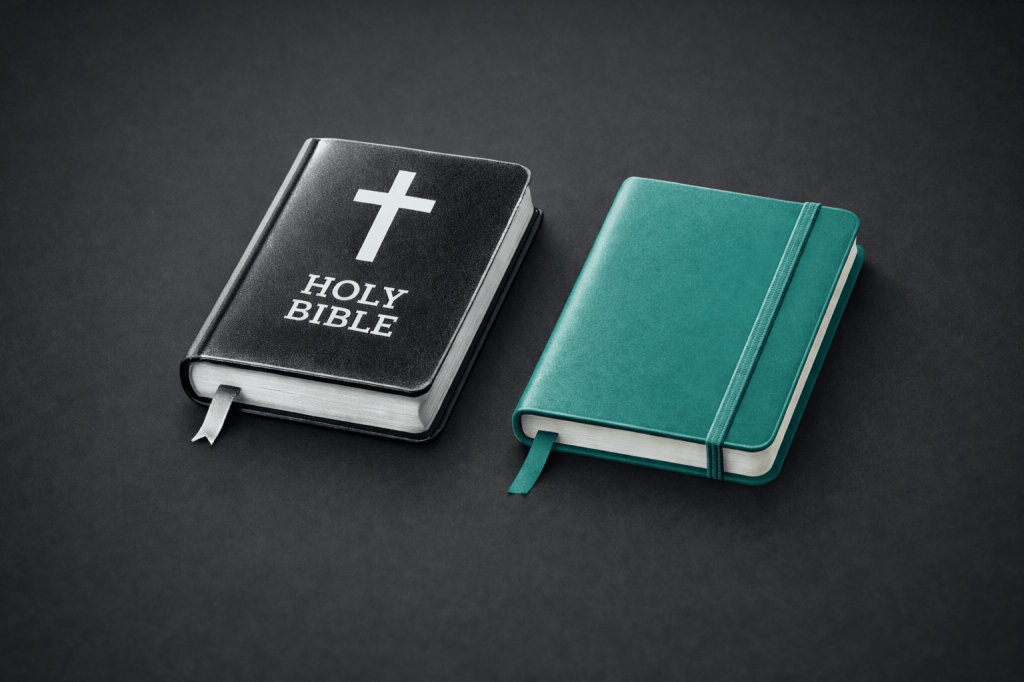
Christian journaling is the practice of writing reflectively in response to Scripture, prayer, and everyday life – with the intention of engaging God rather than merely recording events. The bible is full of people who exercised this practice.
David’s Psalms read like pages lifted straight from a private journal – raw prayers of worship, grief, confession, and honest wrestling. Then you’ve got Nehemiah carefully recording his plans, setbacks and grievances as he leads the rebuilding of Jerusalem. We see similarly vulnerable first-person accounts from Habakkuk and Jeremiah, as disappointment, sorrow, and hope are laid bare, expressing faith without filters or polish.
Throughout, although the Bible does not specifically command journaling, it repeatedly affirms remembering, recording, and reflecting; inviting us to experience journaling’s many proven benefits.
Perhaps one of the best examples of this is Joshua 4:3–7…
After crossing the Jordan, Israel sets up twelve stones to become a lasting testimony of God’s consistent care and protection. In the same way, a Christian journal becomes a set of spiritual memorials; written markers of personal experience and God’s guidance that you can return to when doubt or discouragement creeps in.
Christian gratitude journaling is about naming specific wins or joys as you experience them – as evidence of God’s ongoing care. It gently shifts your focus from what’s missing to what’s already present, training your mind to notice God at work in moments that are easy to breeze past.
How to start:
Set aside 5 quiet minutes and write today’s date.
List 3–5 specific things you’re grateful for, but don’t be vague – go for detail:
“Emily called exactly when I felt alone.”
“God provided parking in a full lot.”
Finally, add one or two sentences on why each mattered or how it made you feel.
This practice helps you slow your thinking and become sensitized to positive experiences, enhancing both your wellbeing and outlook.
When to use it:
In discouraging seasons, when life feels heavy or God’s goodness feels hard to spot. Gratitude anchors you in what’s true, not just what’s loud or worrying.
Turn gratitude into lasting insight
Natality helps you turn everyday gratitude into deeper awareness, using gentle, faith-shaped prompts to help you recognize patterns of God’s care you might otherwise miss.
Download Natality for FREE, and discover a new way to journal with intention and purpose.
Prayer journaling: Writing conversations with God
Prayer journaling takes prayer out of your head and puts it on the page, where it’s harder to lose track of. It brings clarity, keeps you focused, and gives you a simple way to track both what you’ve asked for and how God responds over time.
How to start:
Begin naturally: “Dear God,” “Father,” or simply “Lord…”
Write what’s actually on your heart – requests, fears, confessions, questions, intercession.
Date each entry so you can spot God’s answers later.
Revisit older entries and note outcomes in the margin (for example, “ANSWERED – 2/15/25” or “STILL WAITING.”)
When to use it:
When spoken prayer feels scattered, anxiety takes over, or you want a written record of God’s consistent goodness.
Bible journaling: Processing timeless truths
Bible journaling is the practice of responding to Scripture in writing to record insights and prayers.
It helps truths move from the page into daily life by taking you past simply reading a passage and into actually sitting with it. This is where meaning sharpens, conviction gets personal, and next steps come into focus.
The SOAP method keeps things simple and accessible, especially if you’re just getting started.
How to start using SOAP:
S — Scripture: Write out the verse or passage.
O — Observation: What stands out? What’s happening in context?
A — Application: Where does this land in your life right now?
P — Prayer: Write a response to God.
When to use it:
During bible reading, when a passage grabs your attention, or when you’re looking for clarity or direction.
Faith journaling: Seeing life through a spiritual lens
Faith journaling helps you process life’s highs and lows through the lens of truth, bringing everyday moments into the work of spiritual formation.
How to start:
Choose a rhythm that fits your life – daily, weekly, or after significant moments.
Write freely about what happened, no polishing required.
Then add spiritual reflection:
Where was God at work?
What might He be teaching?
What response is He inviting from you?
When to use it:
After big decisions, during seasons of change, while processing grief or joy, or anytime life feels disorienting and you need a broader perspective.
How to journal daily as a Christian (without it becoming legalistic)
Daily Christian journaling works best when it is rhythmic, flexible, and grace-led rather than rigid. To get started:
But whichever method you choose will offer a fresh entry point into conversation with God, and a tool for greater awareness. So, pick one, write your first line, and let simplicity – not perfection – carry you forward.
Unlock the power of journaling with AI
Natality is an interactive journaling app that offers personalized, faith-aware prompts for processing everyday experiences and deepening your faith.
Download Natality for FREE, and discover a new way to journal with intention and purpose.
Christian journaling FAQs
Is journaling good for Christians?
Journaling is helpful for Christians because it focuses attention, clarifies prayer, and strengthens spiritual awareness.
It can powerfully deepen your relationship with yourself and God largely because it slows you down long enough for thoughts that were already there to surface. Research on reflection and mind-wandering consistently shows how latent concerns, insights, and priorities rise into awareness when we lessen our pace; which is something many experienced during the pandemic and lockdowns – when life paused, long-ignored questions came into focus, prompting career shifts and major life decisions.
Journaling recreates that kind of intentional slowdown on purpose, offering a structured way to process life with God rather than carrying your experiences internally and alone. Its impact isn’t in the writing itself, but in the space it opens; space to listen, to be honest, and discern new paths forward.
As the bible puts it, “Be still, and know…”
What makes Christian journaling different?
Three defining characteristics
1. A conversation, not just documentation
Although you may often write about your day, faith-shaped journaling is also a way of writing to God. Over time, your journal becomes a personal meeting place where you process life with Him openly and honestly.
2. A place for revelation as well as reflection
Journaling naturally starts with, “What am I feeling or thinking?” Christian journaling gently widens the lens, making space for noticing where God might be present, active, or quietly shaping events beneath the surface.
3. Scripture shaped
Entries often grow out of time spent reading the Bible, capturing resonant phrases, honest reactions, and insights as they connect with everyday life.
Do I need to journal every day for it to be effective?
No. And for many people, insisting on daily journaling actually works against its purpose.
Christian journaling is less about frequency and more about faithful attention. What matters is not how often you write, but whether journaling becomes a place you can return to when something needs naming, processing, or holding before God.
Research on habit formation consistently shows that sustainable practices are those that feel supportive rather than demanding. When journaling is framed as something you should do every day, it can quickly turn into a source of pressure or guilt — especially during busy or emotionally heavy seasons.
Prayer is primarily relational — speaking, listening, and responding to God. Journaling, by contrast, is a reflective practice that supports prayer by slowing thought, externalizing experiences, and helping you notice what’s already present beneath the surface.
Many people find that journaling becomes a threshold into prayer: a way of settling scattered thoughts, naming emotions honestly, or tracing patterns they hadn’t noticed before. From there, prayer becomes more grounded, specific, and sincere.
In that sense, rather than replacing prayer, journaling prepares the ground for it. It helps you arrive before God with greater awareness of what you’re actually carrying, rather than what you think you should bring.




 Natality
Leave a comment